
 English
 Русский
 Español
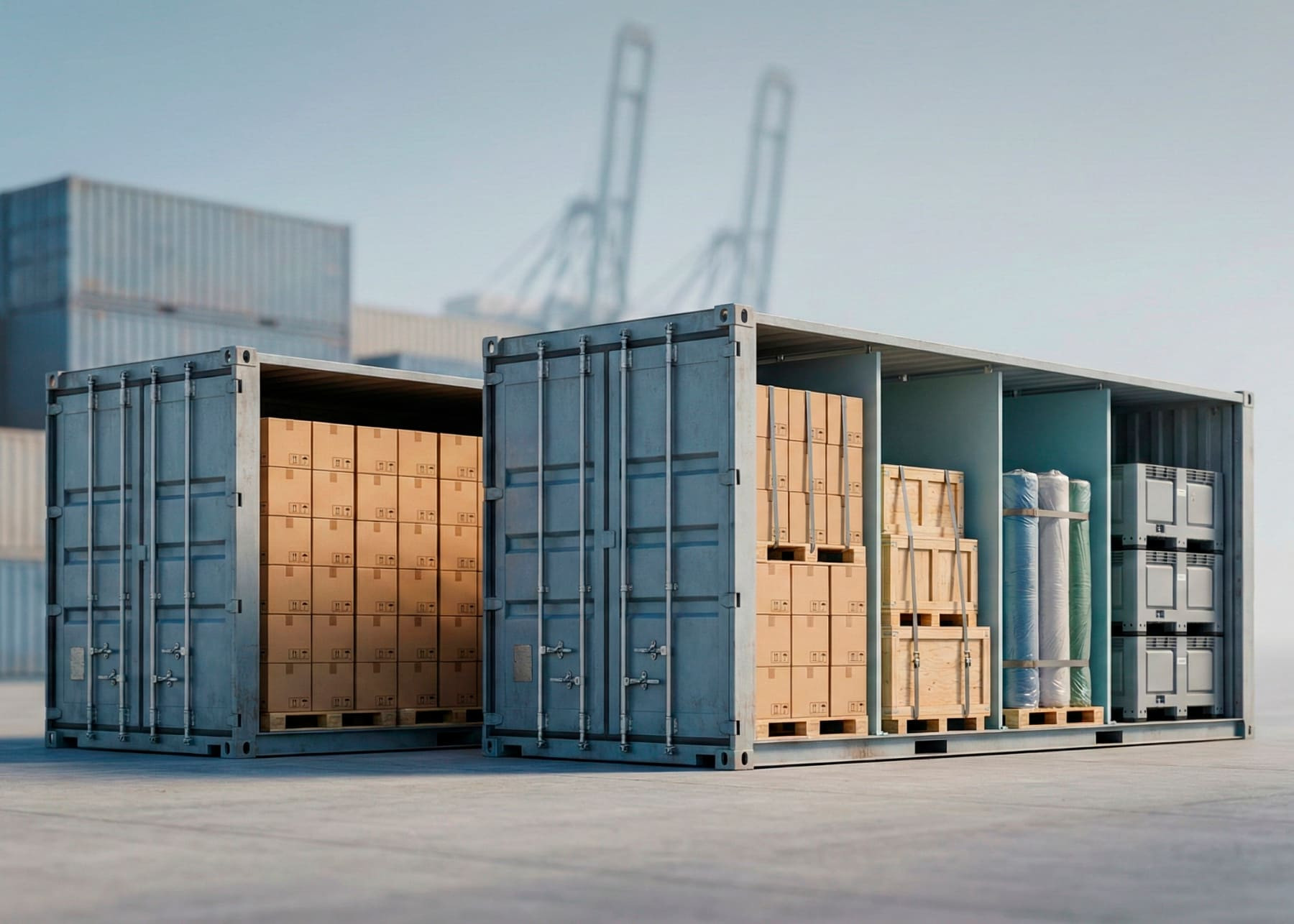
FCL (Full Container Load) is a shipping method where the shipper’s cargo occupies an entire container without sharing space with other goods. In other words, the container is reserved entirely by one client, which is typically used for large shipment volumes. LCL (Less than Container Load), on the other hand, involves shipping cargo as part of a consolidated load: the container is shared among several shippers, and each pays only for the space occupied by their goods. Both methods play an important role in international logistics and help optimize delivery in different scenarios. Below, we will examine their differences, advantages, and disadvantages, as well as when each method is more beneficial.
What Is FCL (Full Container Load)?
FCL is a container shipping format in which you rent an entire container for your cargo. The container is loaded with goods from only one shipper, even if it is not filled to 100%. This provides exclusive use of the container, meaning there are no third-party goods inside. This approach offers several advantages:
- Exclusive control and security. Since the entire container belongs to a single shipper, risks associated with proximity to other goods are eliminated. The container is sealed at the shipper’s warehouse and opened only at the consignee’s location, reducing the likelihood of theft or cargo substitution during transit. The risk of damage is also minimized, as no third party will handle or reposition your goods.
- Faster dispatch and delivery. With FCL, there is no need to wait for other shipments to be ready. As soon as your container is loaded, it can be shipped without going through consolidation. This speeds up handling and reduces overall transit time.
- Cost efficiency for large shipments. Although renting an entire container is more expensive in absolute terms, it is often more economical per unit of cargo for large volumes. The shipping cost is distributed across the full load, making FCL more cost-effective than multiple smaller LCL shipments. For example, if you consistently transport large volumes close to full container capacity, FCL can reduce costs by eliminating consolidation fees and lowering rates per unit of volume.
FCL is generally recommended when the shipper has enough goods to fill a significant portion of the container, or when timing and cargo integrity are especially important. This method is optimal for fragile or high-value goods requiring careful handling (such as electronics or machinery), as they are protected from contact with other cargo. FCL is also the best choice for highly sensitive or hazardous goods that require specific transport conditions. Having full control of the container makes it easier to maintain required transportation parameters (such as temperature control) and safety compliance.
What Is LCL (Less than Container Load)?
LCL is a shipping format in which you send consolidated cargo occupying only part of a container. Your goods are combined at a warehouse with shipments from other shippers heading in the same direction, and all cargo is loaded into one container. You pay not for the entire container, but only for the actual volume or weight of your shipment. This method is ideal for small cargo volumes when renting a full container is not economically justified.
Key characteristics of LCL shipping:
- Cost efficiency for small shipments. You pay only for the occupied space, making LCL significantly cheaper than using a partially filled FCL container for small volumes. For example, if you have only a few boxes or a couple of pallets, consolidated shipping allows you to save costs by sharing the container with other shippers.
- Flexibility for small businesses. LCL eliminates the need to accumulate goods to fill an entire container. You can ship smaller batches as needed, without waiting to build up large volumes. This is convenient for startups or businesses with irregular supply flows, allowing faster response to demand and reducing working capital tied up in inventory. Additionally, it reduces the need for large storage facilities, lowering warehousing costs.
- Access to global trade routes. Consolidated cargo allows smaller shippers to participate in international trade without requiring large volumes. Even if your business is still developing, LCL enables overseas shipments using the same container shipping lines as large corporations.
However, LCL has limitations. First, delivery is typically slower due to consolidation time: your cargo may wait at the warehouse until the container is fully assembled, and additional time is required after arrival for cargo deconsolidation and distribution. Second, shippers have less control, as multiple shipments share the same container, making it impossible to fully eliminate compatibility risks (for example, improperly packed cargo from another shipper could damage yours). Delays may also occur beyond your control, such as customs issues with another shipment holding the entire container. Third, not all types of cargo are suitable for LCL. Hazardous, oversized, or special-condition cargo is often restricted or requires complex coordination. These limitations should be considered when selecting a shipping method.
FCL vs LCL: Key Differences
The choice between FCL and LCL depends on many factors, including cargo volume, transportation costs, transit time, risks, cargo type, and shipping frequency. The table below summarizes the key differences between full container shipments and consolidated cargo:
| Criteria | FCL (Full Container) | LCL (Consolidated Cargo) |
| Shipment Volume | Large – one shipper fills the container, optimal for shipments close to full capacity (e.g., >15 cubic meters). | Small – occupies part of a container, suitable for smaller shipments (typically up to ~15 m³ or several pallets). |
| Cost | Fixed rate per container. Cost-effective for large shipments (lower cost per unit), but expensive for small volumes – you pay for the entire container even if partially filled. | Payment proportional to cargo volume or weight. Economical for small shipments, as you pay only for your allocated space, but the per-cubic-meter rate is higher than FCL. As volume increases, total cost approaches the price of a full container. |
| Transit Time | Shorter: the container is shipped immediately after loading, without waiting for other cargo. Fewer handling stages and stops, with a direct route to destination. | Longer: requires consolidation of multiple shipments and warehouse handling. Possible dispatch delays while waiting for container completion, as well as additional stops and transshipment points. |
| Risks and Security | Minimal: cargo is isolated in a dedicated container with no third-party access. Fewer handling stages – the container remains sealed from shipper to consignee, reducing risks of damage and theft. | Higher: multiple shipments share one container, increasing risk of damage due to incompatible cargo or packaging differences. Higher risk of delays if one shipment faces customs or documentation issues. |
| Logistics Simplicity | Easier coordination: direct shipping without consolidation. A single set of documents is issued for the container (bill of lading, customs declaration), simplifying clearance. Fewer handling stages – cargo is loaded and shipped directly to the consignee. | More complex coordination: requires consolidation at origin and deconsolidation at destination. Separate documentation is prepared for each shipment, and customs clearance is handled individually, increasing complexity and processing time. Shipment tracking is also more complicated, as multiple consignments share one container. |
| Cargo Types | Versatile: suitable for any cargo, including goods requiring special conditions. Full container shipments can accommodate hazardous, oversized, or temperature-controlled cargo (in refrigerated containers), as the shipper determines transport conditions. | Restricted: not all cargo types are accepted in consolidated shipments. Hazardous chemicals, perishables, and temperature-sensitive cargo are often excluded or require special approval. LCL is mainly suitable for standard, stable cargo without special requirements. |
| Shipping Frequency | Efficient for regular large-volume shipments. Allows shipping according to your own schedule: once cargo is ready, the container is dispatched. With stable shipment flows, FCL becomes more economical and may include carrier discounts for consistent volumes. | Suitable for irregular or occasional shipments. Cargo can be shipped in smaller batches as needed without waiting for full container loads. However, consolidation schedules must be considered – consolidated containers typically depart on fixed schedules (e.g., weekly), limiting flexibility. |
As shown, FCL is suitable for large, high-value, or time-sensitive shipments where renting an entire container is justified by speed and security. LCL is beneficial for smaller shipments, significantly reducing transportation costs, albeit with longer transit times and certain additional risks. In each case, the choice should be based on cargo characteristics, volume, required delivery speed, and shipper priorities.
Advantages and Disadvantages of FCL
Advantages of FCL:
- Faster delivery. The container does not depend on other shipments and is dispatched immediately after loading. There are no delays related to consolidation, which is critical when time is a priority.
- Minimal risk of damage or loss. Your cargo travels alone, eliminating exposure to third-party goods. The sealed container is not opened during transit, reducing theft and damage risks. Cargo is not repeatedly handled or reloaded, minimizing handling-related damage.
- High security and control. Only your cargo is inside, ensuring full control over shipping conditions. Cargo can be secured and arranged optimally according to specific requirements. Administrative complexity is reduced, as one bill of lading and one customs declaration are typically issued per container.
- Cost efficiency for large volumes. If you regularly ship large quantities, FCL provides lower cost per unit of cargo. Paying for an entire container becomes more economical when the load volume is high, and long-term contracts or consistent shipping volumes often result in favorable carrier rates.
Disadvantages of FCL:
- High cost for small shipments. The main drawback is paying for unused space. Even if your cargo does not fill the entire container, you must still pay for full container capacity, making FCL economically inefficient for smaller shipments.
- Inefficient capacity utilization. Closely related to the previous point, insufficient cargo volume leads to paying for empty space or delaying shipments to accumulate cargo. FCL typically requires maximizing container utilization to remain cost-effective, which can be challenging for smaller businesses.
- Volume and infrastructure requirements. FCL assumes sufficient cargo volume and storage capacity prior to shipment. Some companies may need additional warehousing and inventory planning. Loading and unloading containers may also require specialized equipment such as forklifts.
- Upfront costs and demurrage risks. Container rental requires upfront financial commitment, potentially affecting cash flow. If cargo is not ready on time, container idle time may result in additional charges, making FCL more suitable for well-planned and stable supply chains.
Advantages and Disadvantages of LCL
Advantages of LCL:
- Cost savings for small shipments. Consolidated cargo significantly reduces transportation costs when shipment volume is low. You pay only for the container space occupied by your cargo.
- Flexible shipping schedules. LCL is ideal for smaller or irregular shipments. Cargo can be shipped frequently in smaller batches, allowing businesses to respond quickly to demand. This approach is particularly valuable for startups and small businesses that prefer gradual volume growth without major upfront logistics investments.
- Reduced warehousing costs. Shipping in smaller batches eliminates the need for large storage capacity. Inventory turnover improves, storage expenses decrease, and the risk of stock obsolescence is reduced.
- Accessibility and ease of market entry. Consolidated cargo simplifies entry into international trade. Even with limited budgets, LCL enables companies to ship goods internationally in small batches, test new markets, and reduce upfront logistics costs.
Disadvantages of LCL:
- Longer transit times. Consolidated shipping involves additional steps such as consolidation at origin and deconsolidation at destination warehouses, increasing overall transit time compared to FCL. Waiting for container completion may also cause delays.
- Risk of delays and external factors. When multiple shippers share a container, issues affecting one shipment can delay all shipments. Customs inspections or documentation problems related to one shipment can hold the entire container. Terminal congestion and partner processing delays may also extend cargo release times.
- Increased risk of damage or loss. Goods from multiple shippers are transported together, and packaging quality or compatibility cannot always be controlled. Additional handling during consolidation and distribution increases the risk of loss or damage. Cargo insurance is strongly recommended for LCL shipments.
- Documentation and clearance complexity. Since multiple shipments share one container, documentation requirements are more detailed. Group bills of lading and individual shipment documents are often required. Customs clearance is performed separately for each shipment, which may extend release time.
- Cargo type restrictions. Not all goods are suitable for consolidated shipping. Hazardous cargo, perishables, and temperature-controlled shipments are typically excluded or require special arrangements. Oversized or heavy cargo may also be unsuitable for LCL, requiring carrier approval on a case-by-case basis.
Shipping Costs and Transit Times: How They Are Calculated
FCL Pricing
FCL pricing is typically calculated using a fixed rate per container, based on route and container type. Carriers publish freight rates, allowing straightforward calculation of costs for 20-foot or 40-foot containers. The rate usually includes ocean freight and container-related charges. Additional costs may include port fees, inland transportation, customs clearance, and related services. Therefore, the main pricing factors for FCL are route distance, container size, and additional logistics services. Oversized or heavy cargo may require special containers or handling, increasing cost. Overall, FCL pricing resembles renting full transport capacity regardless of actual cargo volume.
LCL Pricing
LCL pricing is calculated differently. Since the container is shared among multiple shippers, cost is based on cargo volume (in cubic meters) or weight, whichever determines space utilization. In ocean freight, volume usually plays the primary role, as container space is the limiting factor. Carriers specify rates per cubic meter or ton for specific routes, and costs are calculated proportionally. However, LCL shipments include additional charges such as origin warehouse handling, cargo consolidation, documentation processing, destination warehouse unloading, and cargo distribution. These costs can be substantial and sometimes comparable to ocean freight charges. Additionally, LCL shipments typically have a minimum charge threshold. Even very small shipments may be billed at a minimum volume rate, making extremely small shipments relatively expensive.
What Influences Costs in Both Cases?
The main factors influencing shipping cost include distance, trade route popularity, seasonality, and freight market conditions. Freight rates often increase during peak shipping seasons. Cargo characteristics also affect pricing – hazardous or high-value cargo may require insurance and additional surcharges. In LCL shipping, cargo handling complexity also affects cost. Non-standard, heavy, or specially packaged goods typically incur higher handling fees. Delivery terms (port-to-port vs. door-to-door) also impact final pricing, as door-to-door shipping includes inland transportation, storage, and related services.
Transit Time Comparison
Ocean transit time is usually the same for both FCL and LCL shipments on the same route, as containers are transported on the same vessels. Differences arise from additional handling procedures. FCL cargo can be delivered to the consignee immediately after unloading, while LCL cargo must first be transported to a consolidation or distribution warehouse. LCL departure schedules may also affect transit time. For example, if consolidated containers depart from Shanghai once per week, cargo arriving earlier may wait for the scheduled departure. FCL shipments provide greater flexibility, allowing selection of vessel schedules that optimize transit time. Upon arrival, FCL containers can be released quickly, while LCL shipments require container opening and cargo sorting, which may add several days. Customs issues with one LCL shipment can delay the entire container, further extending transit time. As a result, LCL shipments are typically several days or even weeks slower than comparable FCL shipments.
Estimated transit example: ocean freight from China to St. Petersburg typically takes approximately 30–40 days at sea. FCL shipments usually require an additional 1–3 days for loading and port clearance at origin, and a similar timeframe at destination, totaling approximately 35–45 days. LCL shipments require additional consolidation time (usually 5–7 days) and deconsolidation time (3–5 days). Additional waiting time for vessel availability may add another week. As a result, LCL shipments may take approximately 45–55 days under similar conditions. Actual timelines vary, but consolidated cargo typically requires 20–30% longer transit time than full container shipments.
When to Use FCL and When to Use LCL
Choosing the right shipping method depends on your specific logistics scenario. Below are typical situations where FCL or LCL is most beneficial, considering cargo characteristics, shipment volume, budget, and urgency:
When to Choose FCL
- Very large shipment volumes. If your cargo volume approaches container capacity (e.g., 15–20 cubic meters or more, or cargo weight approaching 20–25 tons), renting a full container is often cost-effective. FCL allows optimal space utilization and fixed pricing, avoiding rapidly increasing per-cubic-meter LCL costs.
- Regular high-volume shipments. Businesses requiring frequent large shipments benefit from FCL. Containers can be dispatched as soon as cargo is ready, without reliance on consolidation schedules. Stable shipping volumes may also qualify for discounted carrier rates.
- High-value or fragile cargo. Security often outweighs freight cost savings for sensitive goods. Electronics, premium products, glass, ceramics, and technical equipment benefit from dedicated container space, reducing handling and contamination risks. Cargo requiring temperature control or ventilation is also easier to manage in FCL.
- Urgent delivery requirements. When time is critical, FCL is typically faster due to the absence of consolidation delays and reduced transshipment handling. Dedicated containers are especially advantageous on routes with limited consolidation frequency.
When to Choose LCL
- Small shipment volumes. LCL is ideal when cargo volume is significantly lower than container capacity. For example, several boxes, a few pallets, or small equipment shipments are typically more cost-effective as consolidated cargo. Shipments filling less than approximately 50–60% of a container are usually cheaper via LCL.
- Irregular or seasonal shipments. Businesses with fluctuating shipment volumes benefit from LCL flexibility. Smaller shipments can be dispatched as needed without maintaining inventory solely to fill a container. This approach is especially useful for seasonal goods.
- Limited budgets or new businesses. LCL allows companies entering international trade to minimize logistics costs and ship smaller trial shipments. This reduces upfront financial commitments while testing new supply channels or product demand.
- Diverse or distributed cargo sourcing. LCL is effective when shipments originate from multiple suppliers or must be delivered to multiple destinations. Consolidated shipping enables combining cargo from different sources into a single container, optimizing logistics efficiency.
In practice, many companies use a hybrid approach: core bulk shipments are transported via FCL, while assortment replenishment or urgent small orders are shipped via LCL. Evaluating business logistics requirements is essential for selecting the optimal shipping strategy. When shipment volumes fall between clear thresholds, both options should be evaluated, considering storage costs, delay risks, and time value.
Conclusion
The difference between FCL and LCL primarily involves balancing volume, cost, and speed. FCL provides maximum control, faster transit, and higher cargo security but requires significant cargo volume or willingness to pay for unused space. LCL offers cost efficiency and flexibility for smaller shipments but increases transit time and introduces additional logistical risks. Each method serves specific logistics needs: full container shipments are essential for large and stable supply chains, while consolidated cargo enables smaller businesses to participate in global trade.
If you are choosing how to organize international shipping, on AllCargo Market you can quickly compare offers from different carriers and select the optimal solution for your cargo. The platform directly connects shippers and service providers, allowing you to choose convenient routes, rates, and delivery conditions — without intermediaries or unnecessary administrative complexity.