English
 Русский
 Español
Air freight from Uzbekistan
Air transport is used when cargo needs to be delivered faster and transit time must be reduced. This option is typically chosen for urgent shipments and routes where land transport is less convenient.

International shipments from Uzbekistan can be viewed by departure cities, delivery formats, and available routes. This makes it easier to move from a general overview of geography to a specific shipping scheme.
For this direction, air, road, and multimodal transportation are used. The choice of route is usually based on the pickup point, shipment parameters, urgency, and overall route configuration.
Shipments from Uzbekistan are most often organized through land routes, air departures, and combined chains where cargo moves through several segments using different transport modes. The logistics logic here depends not only on the country of origin but also on the specific city where the route starts and how the delivery is further structured.
Key cities for this direction include Tashkent, Samarkand, Bukhara, Margilan, and Kasansay. These locations allow shipments to be viewed not in general terms, but as concrete routes with a clear logistics structure.
Below are the routes that can be viewed by departure city and transport format.
For shipments from Uzbekistan, several transport schemes are used, and each of them solves a specific practical task.
Air transport is used when cargo needs to be delivered faster and transit time must be reduced. This option is typically chosen for urgent shipments and routes where land transport is less convenient.

Road transport is suitable for direct international shipments overland. This format is convenient for full truckloads, regular shipments, and consolidated cargo.

Multimodal transport is used when a route consists of multiple transport segments. It is suitable when cargo from a departure city in Uzbekistan needs to be integrated into a more complex international delivery chain.
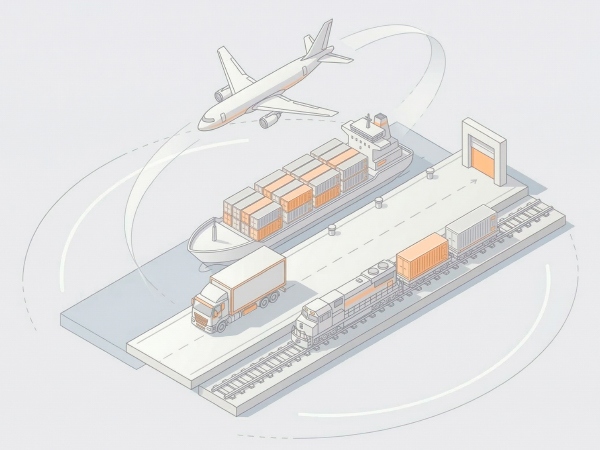
The departure city affects the initial route configuration, the logistics chain structure, and the delivery method.
Tashkent is the most flexible departure city for this direction. It is convenient for building road, air, and combined routes when more routing options are required.
Bukhara is considered a shipping point for international deliveries where the route is built from the location where the cargo is formed. The connection with the main transport leg is especially important here.
Margilan is convenient as a starting point for shipments formed in regional locations and then moved to international routes. Logistics here is based on consolidation and further integration into the main route.
Samarkand can be considered an independent starting point for international shipments without the need to transfer cargo to another city. This simplifies routing for companies that prefer shipping directly from the point of cargo formation.
Transit time and shipping cost are determined by several factors that should be evaluated together rather than separately.

The more complex the route to the destination country, the more it affects both the tariff structure and delivery time. Not only the final point matters, but also the number of transit segments along the way.

Shipping from Tashkent, Samarkand, Bukhara, Margilan, or Kasansay creates different logistics configurations. This affects pre-carriage, consolidation, and the overall route structure.

Air, road, and multimodal transport provide different cost models and shipment organization. For the same destination, multiple delivery options may be available.

Full truckload, consolidated shipments, and weight-based pricing affect the final cost differently. For B2B shipments, this is one of the key comparison factors.

If delivery is not direct and includes intermediate segments, this affects both timing and pricing. The more steps in the chain, the more complex the logistics becomes.

Shipment parameters and handling requirements may limit available routing options and transport schemes. The same route may not be suitable for all types of cargo.

Even with identical inputs, conditions on a route may vary. This affects transport availability, dispatch timing, and overall transit speed.
The minimum shipment size for this direction is 100 kg. Smaller shipments are not considered standard cargo for this page.
Air, road, and multimodal transport options are available. The exact format depends on the route, departure city, and shipment structure.
Delivery time depends on the transport scheme, number of route segments, transport type, and specific route conditions. Direct and multimodal shipments differ significantly in transit time.
Shipments are available from Bukhara, Kasansay, Margilan, Samarkand, and Tashkent. These cities are used as starting points for routes on this page.
Rates depend on the route, transport type, shipment parameters, intermediate stops, and departure city. The final price is based on the full logistics structure, not a single factor.
First define the departure city, destination country, and preferred transport format. Then it becomes easier to compare specific routes based on logistics structure.
Yes, routes can be selected based on geography, and then carriers operating on those routes can be reviewed. This is more efficient than searching for carriers separately.
Route cards typically show basic transport details: origin and destination points, transport format, and other data that helps quickly determine whether the route fits the task.